Newsroom

The number of the year: Kaspersky detected half a million malicious files daily in 2025
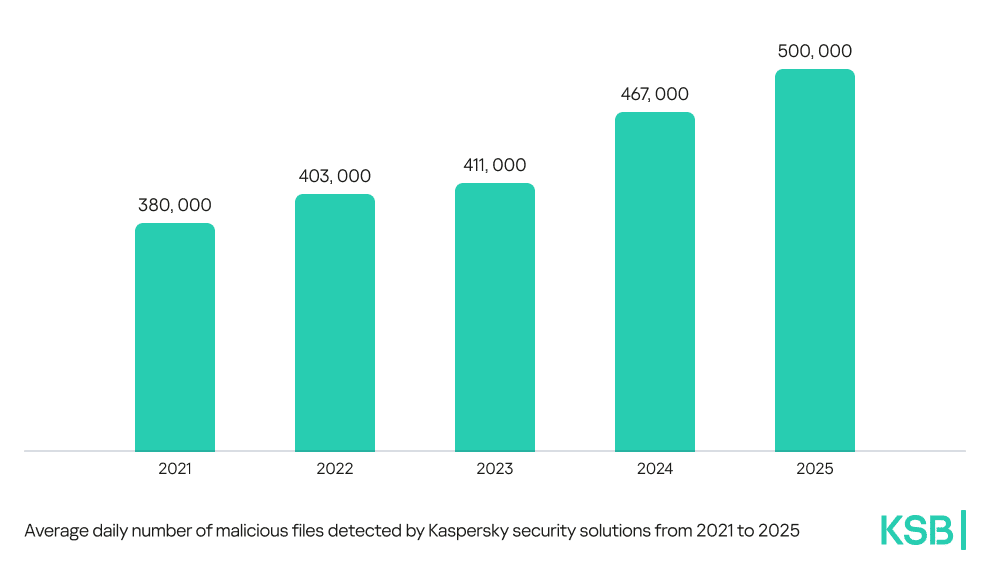
Kaspersky’s detection systems discovered an average of 500,000 malicious files per day in 2025, marking a 7% increase compared to the previous year. Certain types of threats saw growth globally – there was a 59% surge in password stealer detections, a 51% growth in spyware detections and a 6% growth in backdoor detections compared to 2024.
These findings are part of the Kaspersky Security Bulletin series where we review the key cybersecurity trends of the past year.
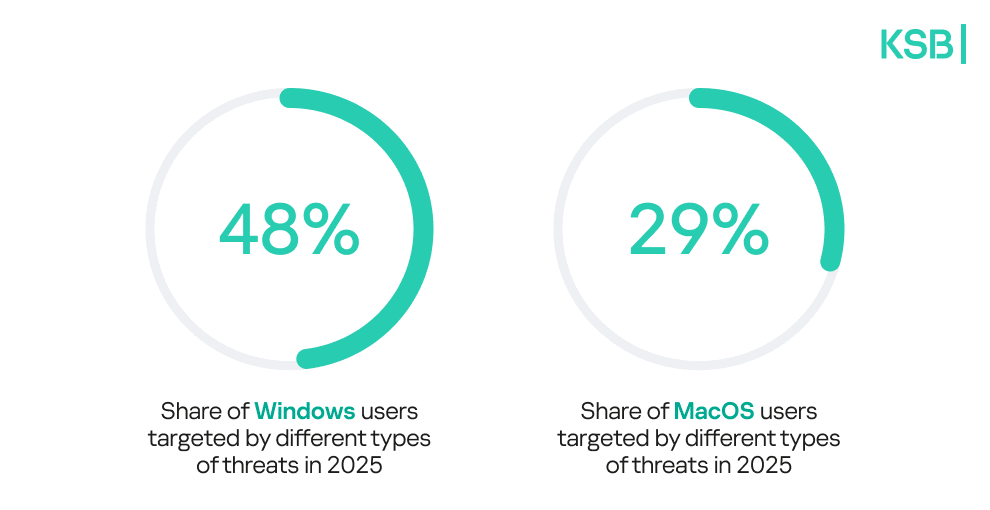
Windows remains the primary target for cyberattacks. 48% of users on Windows were targeted by different types of threats throughout 2025. For Mac users, this figure stands at 29%.
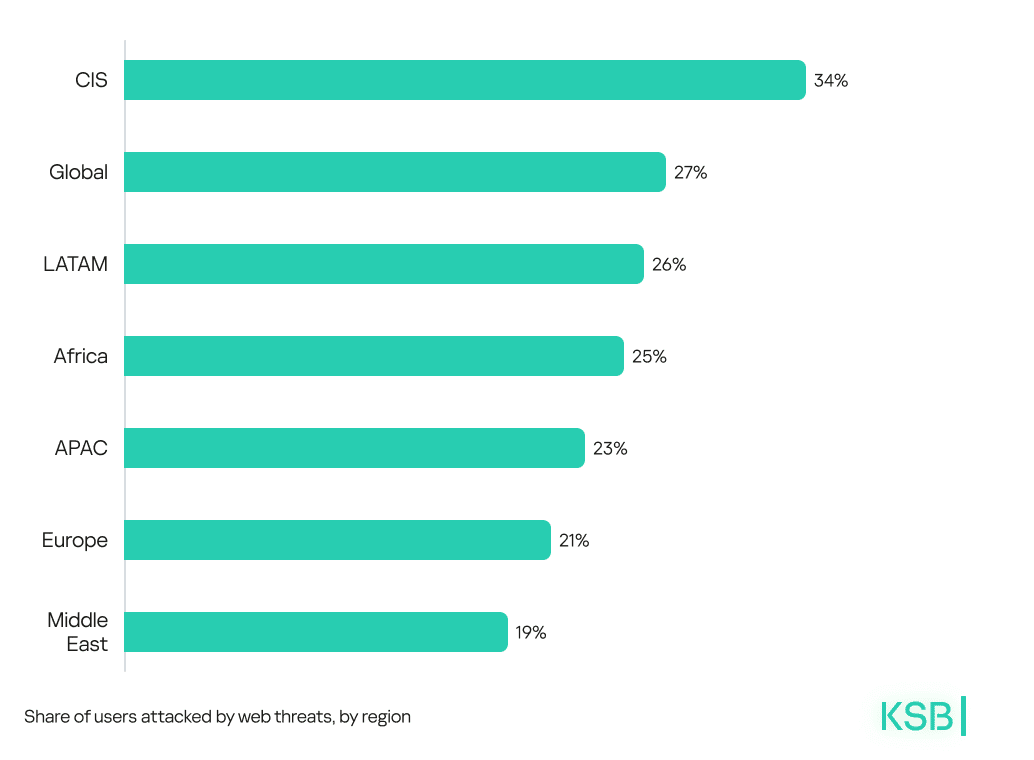
Web threats
Globally, 27% of users were attacked with web threats – these refer to malware that targets users when they are online. Web threats are not limited to online activity, but ultimately involve the internet at some stage for inflicted harm.
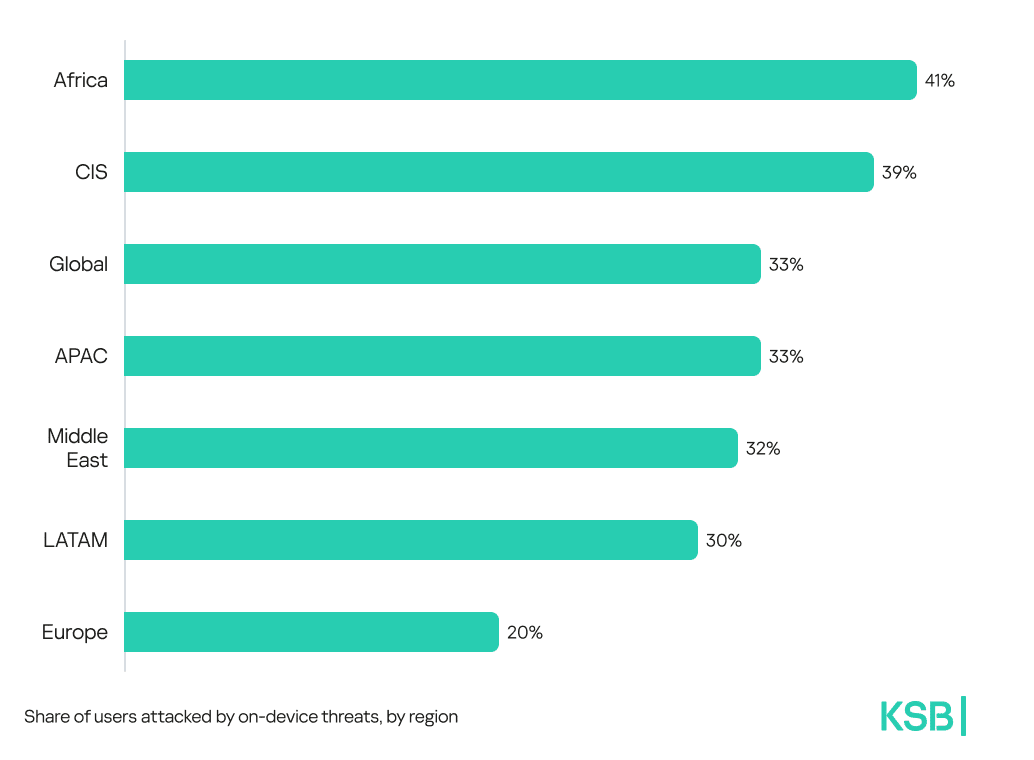
On-device threat
33% of users were attacked with on-device threats. These include malware that is spread via removable USB drives, CDs and DVDs, or that initially makes its way onto the computer in non-open form (for example, programs in complex installers, encrypted files, etc.).
Regional trends from 2024 to 2025 (malware detections)
LATAM
-
● 24% increase in backdoors
-
● 35% increase in password stealers
-
● 64% increase in spyware
Middle East
-
● 26% increase in password stealers
-
● 37% increase in spyware
Europe
-
● 1% increase in on-device threats
-
● 50% increase in backdoors
-
● 5% increase in exploits
-
● 48% increase in password stealers
-
● 64% increase in spyware
APAC
-
● 132% increase in password stealers
-
● 32% increase in spyware
Africa
-
● 2% increase in backdoors
-
● 43% increase in password stealers
-
● 53% increase in spyware
CIS
-
● 19% increase in on-device threats
-
● 25% increase in backdoors
-
● 10% increase in exploits
-
● 67% increase in password stealers
-
● 68% increase in spyware
“The current cyberthreat landscape is defined by increasingly sophisticated attacks on organizations and individuals around the world. One of the most significant revelations made by Kaspersky this year was the resurgence of the Hacking Team after its 2019 rebranding, with its commercial spyware Dante used in the ForumTroll APT campaign, incorporating zero-day exploits in Chrome and Firefox browsers. Vulnerabilities remain the most popular way for attackers to get into corporate networks, followed by using stolen credentials – hence the rise in password stealers and spyware we see this year. Supply chain attacks are also common, including attacks on open-source software. This year the number of such attacks increased significantly, and we even saw the first widespread NPM worm Shai-Hulud,” comments Alexander Liskin, Head of Threat Research at Kaspersky. “This increasingly complex threat landscape makes implementing robust cybersecurity strategies vital for organizations, as failure to do so can lead to months of downtime in the event of attacks. Individual users should also always use reliable security solutions, otherwise they put not only their data and money at risk, but also those of the organizations where they work.”
Follow this link to learn more about other KSB reports.
To stay protected, follow the recommendations below.
Individual users:
-
● Do not download and install applications from untrusted sources
-
● Do not click on any links from unknown sources or suspicious online advertisements
-
● Always use two-factor authentication when available. Create strong and unique passwords, using a mix of lower-case and upper-case letters, numbers, and punctuation. Use a reliable password manager to help to remember them
-
● Always install updates when they become available; they contain fixes for critical security issues
-
● Ignore messages asking to disable security systems for office or cybersecurity software
-
● Use a robust security solution appropriate to your system type and devices, such as Kaspersky Premium
All statistics in this report come from Kaspersky Security Network (KSN). For 2025, the statistics cover the period from November 2024 through October 2025.
About Kaspersky
Kaspersky is a global cybersecurity and digital privacy company founded in 1997. With over a billion devices protected to date from emerging cyberthreats and targeted attacks, Kaspersky’s deep threat intelligence and security expertise is constantly transforming into innovative solutions and services to protect individuals, businesses, critical infrastructure, and governments around the globe. The company’s comprehensive security portfolio includes leading digital life protection for personal devices, specialized security products and services for companies, as well as Cyber Immune solutions to fight sophisticated and evolving digital threats. We help millions of individuals and nearly 200,000 corporate clients protect what matters most to them. Learn more at www.kaspersky.com.
.png)

GoodAccess Announces Strategic Distributor Partnership in the Philippines to Strengthen SME Cybersecurity with Zero Trust Network Access
Quick Heal Technologies Limited, a global cybersecurity leader, has entered into a strategic distributor partnership with iSecure Networks Inc. (ISN), one of the leading cybersecurity solutions distributors in the…

Quick Heal Technologies Limited Strengthens Global Reach with Strategic Partnership with iSecure Networks Inc. in the Philippines
Quick Heal Technologies Limited, a global cybersecurity leader, has entered into a strategic distributor partnership with iSecure Networks Inc. (ISN), one of the leading cybersecurity solutions distributors in the Philippines.

Acronis Named as Leading Cybersecurity Provider in the 2025 CRN Security 100
Acronis, a global leader in cybersecurity and?data protection, today announced that?CRN®, a brand of The Channel Company, has named the company to its Security 100 list for the fourth year in a row.